Global Nanopore Sequencing Market Outlook
The global nanopore sequencing market is anticipated to expand at a CAGR of approximately 11% during the forecast period, driven by the growing need for real-time, portable, and rapid DNA and RNA sequencing technologies across healthcare, research, and environmental applications.
Get Free Sample Report: https://meditechinsights.com/nanopore-sequencing-market/request-sample/
The increasing emphasis on rapid pathogen detection, infectious disease surveillance, and decentralized diagnostics has significantly elevated the relevance of nanopore sequencing in both developed and emerging economies.
Unlike traditional sequencing platforms, nanopore sequencing enables immediate data generation, making it particularly valuable in time-sensitive clinical and public health scenarios.
Despite its strong growth potential, challenges such as higher base-calling error rates and lack of standardized sample preparation workflows continue to limit broader adoption in regulated clinical environments.
Report Overview
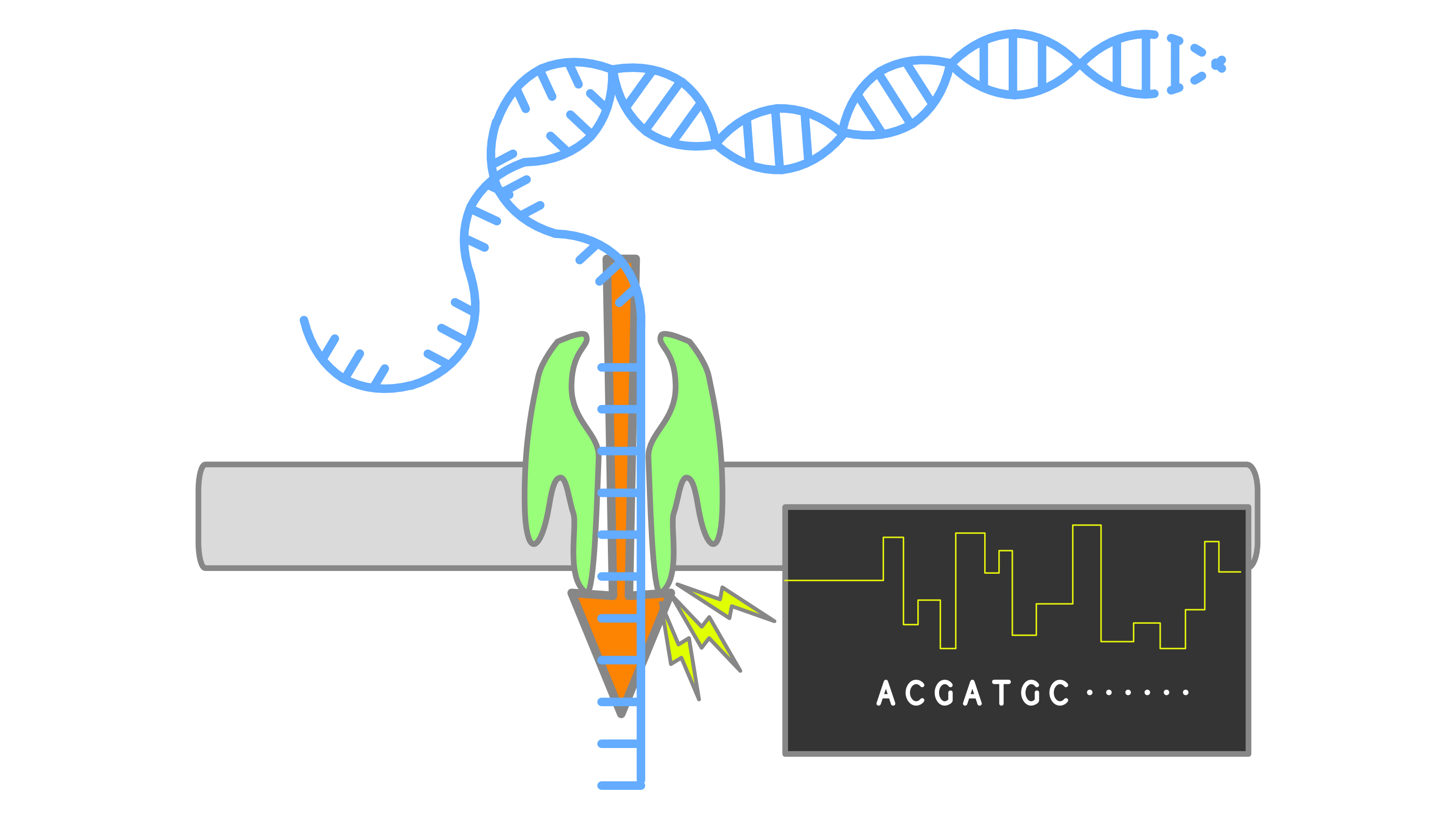
Nanopore sequencing is an advanced genomic sequencing technology that analyzes nucleic acids by measuring changes in electrical current as DNA or RNA molecules pass through nanoscale protein pores embedded in a membrane.
This technique eliminates the need for PCR amplification or fluorescent labeling, allowing native nucleic acid molecules to be sequenced directly in real time.
One of the defining advantages of nanopore sequencing is its ability to generate ultra-long reads, which are critical for identifying structural variants, repetitive regions, and complex genomic rearrangements.
The portability of nanopore sequencing devices has opened new opportunities across clinical diagnostics, environmental genomics, agricultural research, and on-site pathogen surveillance.
As genomics research increasingly moves beyond centralized laboratories, nanopore sequencing is emerging as a flexible and scalable solution for decentralized sequencing needs.
Real-Time Diagnostics Fuel Adoption of Portable Nanopore Sequencing
The increasing demand for rapid and real-time diagnostics is one of the most influential factors driving adoption of nanopore sequencing technologies.
Nanopore platforms allow clinicians and researchers to analyze genomic data as it is generated, enabling faster clinical decision-making and outbreak response.
During global health emergencies such as the COVID-19 pandemic, nanopore sequencing played a critical role in tracking viral evolution, identifying new variants, and supporting epidemiological surveillance in near real time.
The portability of nanopore devices enables sequencing to be performed in field settings, remote locations, and resource-limited environments where traditional sequencing infrastructure is unavailable.
This capability has democratized access to genomic data and reduced reliance on centralized laboratories, particularly in low- and middle-income regions.
In clinical microbiology, nanopore sequencing is increasingly used for rapid identification of pathogens and antimicrobial resistance genes, improving patient outcomes through timely intervention.
Expanding Applications in Personalized Medicine and Clinical Research
Nanopore sequencing is gaining traction in personalized medicine due to its ability to provide comprehensive genomic insights quickly and cost-effectively.
Long-read sequencing enables accurate detection of structural variants and gene fusions that are often missed by short-read technologies.
In oncology, nanopore sequencing supports cancer genome profiling, minimal residual disease monitoring, and identification of actionable mutations.
Rare disease research is also benefiting from nanopore sequencing, as long-read data improves variant interpretation and diagnostic yield.
The growing focus on individualized treatment strategies is expected to further boost adoption of nanopore sequencing in clinical research and translational medicine.
Biochemical Upgrades Drive Precision in Nanopore Sequencing Tools
Continuous biochemical innovations are significantly improving the accuracy and reliability of nanopore sequencing platforms.
The development of next-generation nanopores, such as R10 nanopores, has enhanced resolution and improved detection of challenging genomic regions including homopolymers.
Dual reader-head designs in advanced nanopores provide better signal differentiation, leading to higher consensus accuracy without sacrificing sequencing speed.
Improvements in motor proteins that control the translocation speed of nucleic acids through the pore have resulted in more stable electrical signals and improved base-calling performance.
These biochemical enhancements reduce dependency on computational error correction, making nanopore sequencing more robust for real-world applications.
As accuracy continues to improve, nanopore sequencing is becoming increasingly viable for regulated clinical diagnostics and large-scale research studies.
Role of Nanopore Sequencing in Infectious Disease Surveillance
Nanopore sequencing is playing a transformative role in infectious disease surveillance by enabling rapid genomic characterization of pathogens.
Public health agencies and research institutions are leveraging nanopore sequencing to monitor viral outbreaks, track transmission chains, and detect emerging resistance patterns.
The technology’s ability to deliver actionable insights within hours rather than days is critical for controlling disease spread.
Nanopore sequencing has also proven valuable in monitoring zoonotic diseases and environmental reservoirs that pose risks to human health.
As global health systems prioritize preparedness and early warning mechanisms, nanopore sequencing is expected to become an integral component of infectious disease monitoring frameworks.
Competitive Landscape Analysis
The global nanopore sequencing market is characterized by a mix of established life science companies and innovative technology providers competing on accuracy, portability, and application breadth.
Market players are actively investing in product innovation to enhance sequencing accuracy, throughput, and user-friendliness.
Strategic partnerships with research institutes, healthcare organizations, and government agencies are being used to expand application reach and accelerate technology adoption.
Geographic expansion into emerging markets is another key strategy, driven by rising genomics research funding and increasing demand for decentralized sequencing solutions.
Continuous improvements in consumables, software analytics, and cloud integration are also shaping competition within the market.
Market Drivers
Growing use of nanopore sequencing in real-time infectious disease surveillance and outbreak response.
Increasing demand for portable and field-deployable sequencing platforms across healthcare and research settings.
Rising adoption of long-read sequencing in cancer genomics and rare disease diagnostics.
Ability to sequence native DNA and RNA without amplification or labeling.
Expanding applications in agricultural genomics, food safety, and environmental monitoring.
Rising public and private funding for genomics research in developed and emerging markets.
Attractive Opportunities
Increasing preference for real-time sequencing data in clinical and public health decision-making.
Shift toward decentralized and point-of-care genomics platforms across hospitals and diagnostic laboratories.
Rising investments in portable sequencing technologies from government agencies, research institutions, and private investors.
Integration of nanopore sequencing with AI-driven analytics to improve accuracy and interpretability.
Future Outlook
The nanopore sequencing market is expected to witness sustained growth as technological advancements continue to address accuracy and standardization challenges.
Improvements in chemistry, pore design, and data analytics are likely to expand clinical adoption and regulatory acceptance.
As the demand for rapid, flexible, and decentralized genomic solutions increases, nanopore sequencing is well positioned to play a pivotal role in the future of genomics.
The convergence of portability, real-time data generation, and long-read capability will continue to differentiate nanopore sequencing from conventional sequencing technologies.
Key Players
- Oxford Nanopore Technologies Limited
- QIAGEN
- Thermo Fisher Scientific
- Agilent Technologies, Inc.
- Eurofins Scientific
- F. Hoffmann-La Roche Ltd.
- Bio-Rad Laboratories, Inc.
- Danaher Corporation
- PerkinElmer Inc.
- Pacific Biosciences
- Myriad Genetics, Inc.
Key Request a free sample copy or view report summary: https://meditechinsights.com/nanopore-sequencing-market/request-sample/
About Medi-Tech Insights
Medi-Tech Insights is a healthcare-focused business research & insights firm. Our clients include Fortune 500 companies, blue-chip investors & hyper-growth start-ups. We have completed 100+ projects in Digital Health, Healthcare IT, Medical Technology, Medical Devices & Pharma Services in the areas of market assessments, due diligence, competitive intelligence, market sizing and forecasting, pricing analysis & go-to-market strategy. Our methodology includes rigorous secondary research combined with deep-dive interviews with industry-leading CXO, VPs, and key demand/supply side decision-makers.