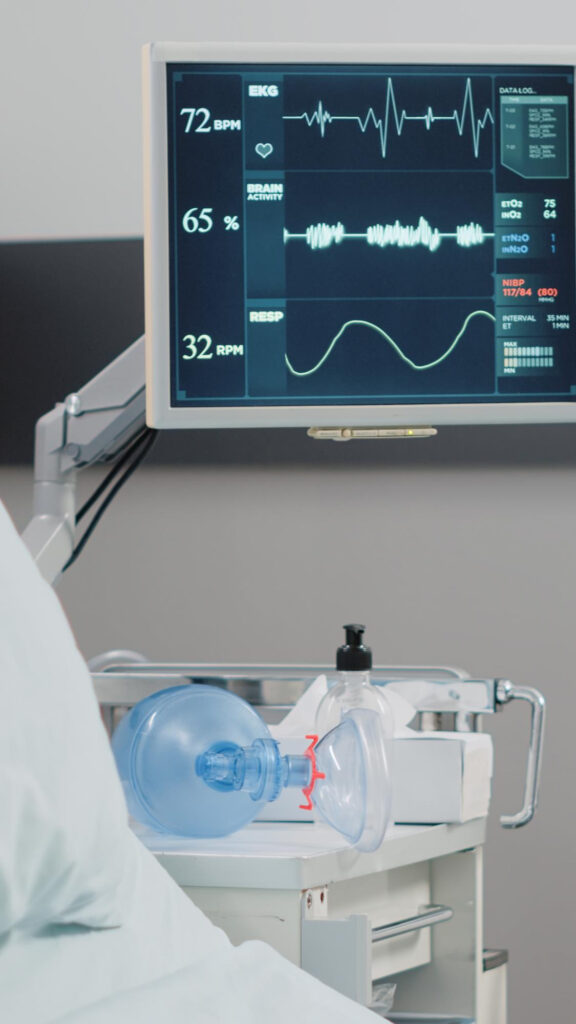
Global Capnography Equipment Market Overview
The global capnography equipment market is expected to grow steadily, registering a compound annual growth rate (CAGR) of approximately 5% during the forecast period. Growing awareness of respiratory monitoring, rising incidence of chronic respiratory diseases, increasing surgical procedures, and greater emphasis on patient safety are driving the demand for capnography systems worldwide. Healthcare providers are increasingly incorporating capnography into routine clinical practice to improve patient outcomes, reduce respiratory complications, and enhance overall quality of care.
Advancements in monitoring technologies, expanding healthcare infrastructure, and favorable clinical guidelines recommending continuous carbon dioxide monitoring are further contributing to market growth. As hospitals and healthcare facilities continue to adopt advanced patient monitoring solutions, capnography equipment is becoming an essential component of respiratory care across multiple healthcare settings.
Get Free Sample Report: https://meditechinsights.com/capnography-equipment-market/request-sample/
Understanding Capnography Equipment
Capnography equipment consists of specialized medical devices that continuously measure and display the concentration of carbon dioxide (CO₂) in exhaled breath. The technology provides real-time assessment of a patient’s ventilatory status by measuring end-tidal carbon dioxide (EtCO₂), allowing clinicians to evaluate respiratory function quickly and accurately.
A capnogram, the graphical waveform generated by capnography, provides valuable information regarding ventilation, airway integrity, circulation, and metabolic activity.
Modern capnography systems include:
Standalone capnometers.
Integrated multiparameter patient monitors.
Portable handheld capnography devices.
Capnography sensors and sampling lines.
Disposable airway adapters.
Wireless monitoring systems.
These devices play a critical role in detecting respiratory compromise before oxygen desaturation becomes clinically apparent.
Clinical Importance of Capnography
Capnography has become an indispensable monitoring tool across numerous clinical environments.
Continuous carbon dioxide monitoring enables clinicians to:
Assess ventilation effectiveness.
Confirm endotracheal tube placement.
Detect airway obstruction.
Monitor procedural sedation.
Evaluate cardiopulmonary function.
Identify respiratory depression.
Monitor mechanically ventilated patients.
Support cardiopulmonary resuscitation.
Compared with pulse oximetry alone, capnography provides earlier detection of ventilation abnormalities, allowing healthcare providers to intervene before severe complications develop.
Its ability to deliver immediate physiological information significantly improves patient safety during anesthesia, emergency care, and critical care management.
Rising Burden of Respiratory Diseases
The increasing prevalence of respiratory disorders remains one of the strongest drivers of market growth.
Growing numbers of patients are being diagnosed with:
Chronic obstructive pulmonary disease (COPD).
Asthma.
Sleep apnea.
Pneumonia.
Acute respiratory distress syndrome (ARDS).
Interstitial lung disease.
Respiratory infections.
Chronic respiratory diseases continue increasing due to aging populations, environmental pollution, tobacco consumption, occupational exposure, and changing lifestyles.
These conditions often require continuous respiratory monitoring to detect clinical deterioration early and guide appropriate treatment.
Capnography enables rapid assessment of ventilatory status while supporting timely intervention in critically ill patients.
Increasing Number of Surgical Procedures
The growing volume of surgical procedures worldwide has significantly increased the demand for capnography equipment.
Capnography has become a standard monitoring tool during general anesthesia because it continuously evaluates ventilation throughout surgical procedures.
It enables anesthesiologists to promptly identify:
Airway obstruction.
Accidental extubation.
Hypoventilation.
Hyperventilation.
Equipment malfunction.
Respiratory depression.
As surgical volumes continue rising across both developed and emerging healthcare markets, demand for reliable respiratory monitoring systems is expected to grow steadily.
Expanding Applications Beyond Operating Rooms
While capnography has traditionally been associated with anesthesia monitoring, its applications have expanded considerably across healthcare.
Today, capnography is widely utilized in:
Intensive care units.
Emergency departments.
Ambulatory surgical centers.
Outpatient clinics.
Emergency medical services.
Trauma care.
Cardiac arrest management.
Neonatal intensive care units.
Home healthcare.
Remote patient monitoring.
Portable capnography devices allow clinicians to monitor respiratory function outside traditional hospital environments, supporting early detection of respiratory compromise in homecare and community healthcare settings.
Growing Focus on Patient Safety
Healthcare organizations worldwide are placing greater emphasis on preventing avoidable adverse events.
Respiratory depression remains one of the leading causes of complications during procedural sedation and anesthesia.
Capnography functions as an early warning system by immediately detecting changes in ventilation before oxygen levels begin to decline.
Early recognition of respiratory compromise reduces the likelihood of:
Cardiac arrest.
Hypoxic brain injury.
Airway emergencies.
Unplanned intensive care admissions.
Sedation-related complications.
Healthcare accreditation bodies and professional medical societies increasingly recommend routine capnography monitoring to improve patient safety and clinical quality.
Technological Advancements Driving Innovation
Continuous innovation has significantly improved capnography device performance.
Modern systems offer:
Improved measurement accuracy.
Enhanced portability.
Wireless connectivity.
Cloud-based data management.
Integration with electronic health records.
Touchscreen user interfaces.
Advanced alarm systems.
Real-time data analytics.
Improved battery life.
Manufacturers continue investing in miniaturization, enabling portable devices suitable for emergency medicine, ambulatory care, and home healthcare.
These advancements improve clinician workflow while expanding access to respiratory monitoring across diverse healthcare environments.
Growth of Microstream Capnography
Microstream capnography has emerged as one of the fastest-growing technologies within the market.
Unlike conventional sidestream systems, microstream technology utilizes lower sampling flow rates while maintaining high measurement accuracy.
This technology provides several important benefits:
Reduced moisture interference.
Improved performance in neonates.
Enhanced monitoring of pediatric patients.
Reliable operation during low tidal volume ventilation.
Greater patient comfort.
Improved portability.
Its expanding clinical applications continue driving adoption across hospitals and specialized care units.
Artificial Intelligence is Enhancing Respiratory Monitoring
Artificial intelligence is becoming increasingly integrated into respiratory monitoring systems.
AI-powered software supports:
Predictive respiratory analytics.
Early deterioration detection.
Automated waveform interpretation.
Clinical decision support.
Trend analysis.
Personalized patient monitoring.
Machine learning algorithms continuously analyze respiratory patterns to identify subtle physiological changes before critical deterioration occurs.
These intelligent capabilities improve clinical efficiency while supporting proactive patient management.
Expansion of Home Healthcare
Healthcare systems increasingly emphasize treatment outside traditional hospital settings.
Portable capnography equipment enables respiratory monitoring for patients receiving long-term care at home.
Applications include:
Chronic respiratory disease management.
Home mechanical ventilation.
Sleep disorder monitoring.
Postoperative recovery.
Palliative care.
Remote physician consultations.
Growing demand for home healthcare services is creating substantial opportunities for manufacturers developing compact and user-friendly monitoring devices.
Regional Market Trends
North America currently represents the largest regional market for capnography equipment.
The region benefits from:
Advanced healthcare infrastructure.
High adoption of patient monitoring technologies.
Established clinical guidelines.
Strong reimbursement systems.
Presence of leading medical device manufacturers.
Europe continues demonstrating stable growth through increasing investment in patient safety initiatives and advanced hospital monitoring technologies.
The Asia-Pacific region is expected to record the fastest market growth during the forecast period.
Rapid hospital expansion.
Increasing healthcare expenditure.
Growing surgical volumes.
Improving healthcare infrastructure.
Rising awareness regarding respiratory monitoring.
Increasing prevalence of respiratory diseases.
These factors continue creating significant opportunities throughout emerging economies.
Recent Industry Developments
Manufacturers continue strengthening their competitive positions through strategic partnerships and technological innovation.
Collaborative initiatives focus on:
Integrated patient monitoring platforms.
Advanced respiratory analytics.
Digital healthcare connectivity.
Wireless monitoring solutions.
Expanded global distribution networks.
Artificial intelligence integration.
These developments continue improving product capabilities while expanding access to advanced respiratory monitoring technologies worldwide.
Market Drivers
Increasing prevalence of chronic and acute respiratory diseases.
Growing emphasis on patient safety and quality improvement.
Rising number of surgical procedures worldwide.
Expanding admissions to intensive care units.
Continuous advancements in capnography technologies.
Increasing adoption of respiratory monitoring across emergency care.
Growing implementation of clinical monitoring guidelines.
Expansion of digital healthcare infrastructure.
Market Opportunities
Expansion of healthcare infrastructure across developing countries.
Growing demand for portable capnography systems.
Increasing adoption of home healthcare services.
Integration of artificial intelligence into respiratory monitoring.
Expansion of remote patient monitoring programs.
Development of wireless connected monitoring devices.
Increasing investment in smart hospital technologies.
Growing adoption within ambulatory care settings.
Future Outlook
The future of the global capnography equipment market remains promising as healthcare providers continue prioritizing patient safety, respiratory monitoring, and early clinical intervention. Ongoing advances in sensor technology, artificial intelligence, wireless connectivity, and predictive analytics will further improve the accuracy and clinical value of capnography systems.
Expanding applications across hospitals, emergency medicine, home healthcare, and remote patient monitoring will continue broadening market opportunities. As healthcare systems increasingly focus on proactive care, improved clinical outcomes, and value-based healthcare delivery, capnography equipment is expected to play an even more important role in respiratory monitoring and comprehensive patient management worldwide.
Key Players
- Medtronic plc
- Koninklijke Philips N.V.
- Masimo Corporation
- GE HealthCare
- Becton, Dickinson and Company
- Drägerwerk AG & Co. KGaA
- Nihon Kohden Corporation
- ICU Medical Inc.
- Shenzhen Mindray Bio-Medical Electronics Co., Ltd.
- ZOLL Medical Corporation
Key Request a free sample copy or view report summary: https://meditechinsights.com/capnography-equipment-market/request-sample/
About Medi-Tech Insights
Medi-Tech Insights is a healthcare-focused business research & insights firm. Our clients include Fortune 500 companies, blue-chip investors & hyper-growth start-ups. We have completed 100+ projects in Digital Health, Healthcare IT, Medical Technology, Medical Devices & Pharma Services in the areas of market assessments, due diligence, competitive intelligence, market sizing and forecasting, pricing analysis & go-to-market strategy. Our methodology includes rigorous secondary research combined with deep-dive interviews with industry-leading CXO, VPs, and key demand/supply side decision-makers.