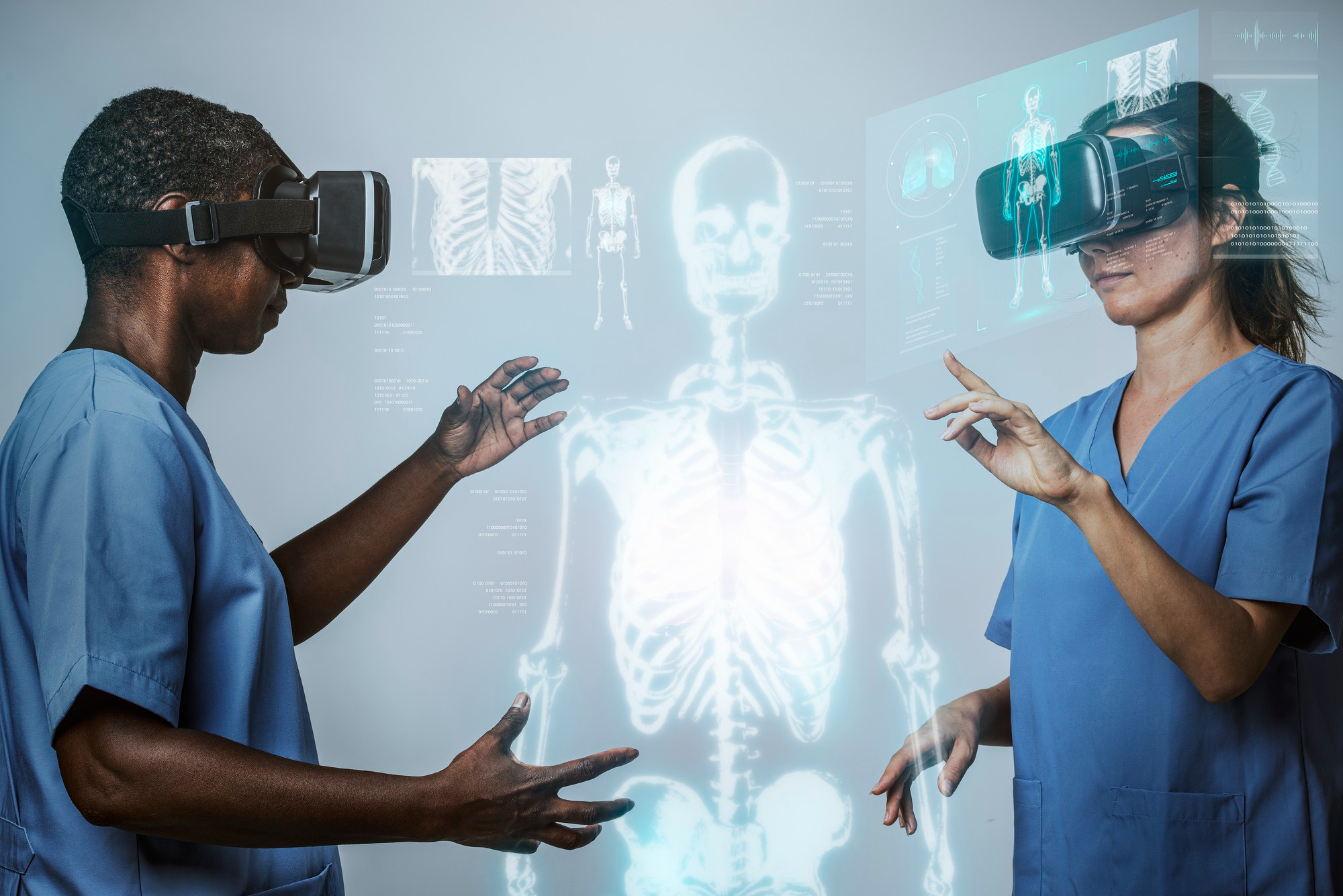
AI in Medical Imaging Market Overview
The global AI in medical imaging market is projected to grow at a CAGR of approximately 30% over the next five years, driven by the increasing prevalence of chronic diseases, rising imaging procedure volumes, and the growing demand for faster and more accurate diagnostics. Healthcare providers are increasingly adopting artificial intelligence to improve radiology workflows, enhance diagnostic precision, and address the global shortage of skilled radiologists.
Artificial intelligence has evolved from supporting isolated image analysis tasks to becoming an integral part of enterprise-wide imaging ecosystems. Modern AI platforms assist clinicians in disease detection, image interpretation, workflow automation, report generation, and clinical decision-making across multiple imaging modalities. As healthcare systems focus on operational efficiency, early disease detection, and value-based care, AI-enabled imaging solutions are becoming essential components of digital healthcare infrastructure.
The market is further supported by increasing investments in cloud computing, enterprise imaging platforms, advanced analytics, and multimodal data integration. Continuous regulatory approvals and technological advancements are expanding the clinical applications of AI across radiology, oncology, cardiology, neurology, pulmonology, and emergency medicine.
Get Free Sample Report:
https://meditechinsights.com/ai-in-medical-imaging-market/request-sample/
Market Drivers
Rising Burden of Chronic Diseases
The growing prevalence of cancer, cardiovascular diseases, neurological disorders, respiratory illnesses, and other chronic conditions has significantly increased the demand for diagnostic imaging procedures. AI-powered imaging solutions help healthcare providers manage increasing workloads while improving diagnostic accuracy and reducing reporting delays.
Growing Demand for Early Disease Detection
Healthcare systems are placing greater emphasis on early diagnosis to improve treatment outcomes and reduce long-term healthcare costs. AI algorithms assist clinicians in detecting subtle abnormalities that may be overlooked during manual image interpretation, supporting earlier clinical intervention.
Shortage of Radiologists
Many countries continue to experience shortages of trained radiologists and imaging specialists. AI-powered workflow automation, image prioritization, and decision-support systems help optimize radiologist productivity, enabling healthcare organizations to manage increasing imaging volumes without compromising quality.
Expansion of Enterprise AI Platforms
The market is witnessing a transition from standalone AI applications to enterprise-wide imaging platforms that integrate multiple algorithms within a unified environment. These platforms streamline workflow management, simplify software deployment, improve interoperability, and reduce IT complexity across healthcare organizations.
Increasing Investments in Digital Healthcare
Healthcare providers continue to invest in digital transformation initiatives that integrate artificial intelligence, cloud computing, electronic health records, and enterprise imaging systems. These investments are accelerating the adoption of AI-enabled medical imaging solutions worldwide.
Growing Regulatory Support
Regulatory agencies are increasingly establishing clear approval pathways for Software as a Medical Device (SaMD), enabling faster commercialization of AI-powered imaging applications. Improved regulatory frameworks have strengthened confidence among healthcare providers and technology developers.
Market Trends
Migration Toward Enterprise Imaging Platforms
Healthcare organizations are increasingly replacing fragmented AI solutions with centralized enterprise platforms capable of supporting multiple imaging applications across radiology departments. These integrated ecosystems simplify AI deployment, improve scalability, and enhance collaboration between clinicians and IT teams.
Increasing Adoption of Workflow Automation
Workflow automation has become one of the fastest-growing applications of AI in medical imaging. AI-powered systems automatically prioritize critical cases, streamline reporting processes, and optimize radiology worklists, enabling faster diagnosis for emergency conditions such as stroke, intracranial hemorrhage, pulmonary embolism, and aortic dissection.
Growth of Multimodal AI Solutions
Artificial intelligence is evolving beyond image interpretation by integrating imaging data with electronic health records, laboratory findings, genomic information, and longitudinal patient histories. Multimodal AI platforms provide more comprehensive clinical insights, supporting personalized treatment planning and precision medicine.
Integration of AI into Imaging Equipment
Leading medical imaging manufacturers are embedding AI capabilities directly into imaging systems, allowing real-time image reconstruction, automated quality enhancement, and advanced clinical decision support during image acquisition.
Expansion of Cloud-Based AI Deployment
Cloud computing has emerged as the preferred deployment model for many healthcare providers due to its scalability, lower infrastructure costs, simplified software updates, and ability to support enterprise-wide AI implementation across multiple facilities.
Growing Use of AI in Emergency Care
Emergency departments are increasingly adopting AI-enabled triage systems that rapidly identify critical findings and prioritize urgent imaging studies. Faster diagnosis contributes to shorter treatment times and improved patient outcomes in time-sensitive clinical situations.
Market Restraints
Data Privacy and Cybersecurity Concerns
The increasing use of cloud-based imaging platforms raises concerns regarding patient data privacy, cybersecurity, and compliance with regional healthcare regulations. Healthcare organizations must implement robust security frameworks to protect sensitive medical information.
High Implementation Costs
Although AI improves long-term operational efficiency, the initial investment required for software integration, infrastructure upgrades, staff training, and workflow redesign can limit adoption among smaller healthcare providers.
Integration Challenges
Healthcare organizations often operate diverse imaging equipment and information systems from multiple vendors. Achieving seamless interoperability between AI platforms, Picture Archiving and Communication Systems (PACS), Radiology Information Systems (RIS), and Electronic Health Records (EHR) remains a significant implementation challenge.
Regulatory and Clinical Validation Requirements
AI developers must demonstrate clinical effectiveness, safety, and regulatory compliance before commercial deployment. Continuous validation and post-market monitoring are necessary to maintain physician confidence and regulatory approval.
Market Opportunities
Expansion of Cloud-Based Imaging Solutions
Cloud deployment offers healthcare providers flexible infrastructure, lower capital expenditure, centralized software management, and easier access to AI applications across geographically distributed healthcare networks. Continued cloud adoption presents substantial growth opportunities for AI solution providers.
Growing Demand for Precision Medicine
The integration of imaging, genomics, pathology, and clinical data creates opportunities for AI-powered precision diagnostics and personalized treatment planning, particularly in oncology and chronic disease management.
Development of Hybrid AI Architectures
Hybrid deployment models combining cloud-based computing with on-premises processing enable healthcare providers to balance performance, security, and regulatory compliance while supporting advanced AI applications.
Emerging Healthcare Markets
Improving healthcare infrastructure, increasing imaging capacity, and expanding digital health initiatives across Asia-Pacific, Latin America, the Middle East, and Africa provide significant opportunities for AI medical imaging vendors.
Increasing Adoption in Population Health Programs
AI-powered imaging is increasingly being utilized in national screening initiatives for tuberculosis, lung cancer, breast cancer, and cardiovascular disease, enabling earlier diagnosis across large populations.
Deployment Analysis
Cloud-Based Deployment
Cloud-based solutions represent the largest deployment segment due to their flexibility, scalability, simplified maintenance, and lower infrastructure costs. Healthcare providers benefit from rapid software updates, centralized AI management, remote accessibility, and easier integration with enterprise imaging platforms. Cloud deployment is particularly attractive for hospital networks, outpatient imaging centers, and teleradiology providers seeking cost-effective digital transformation.
On-Premises Deployment
On-premises solutions remain important for healthcare institutions requiring maximum control over patient data, network performance, and regulatory compliance. Academic hospitals, government healthcare organizations, and facilities operating under strict data localization requirements continue to prefer locally hosted AI infrastructure. Hybrid deployment strategies are increasingly combining local processing with cloud-based analytics to optimize performance and security.
Modality Analysis
X-Ray
X-ray remains the leading imaging modality for artificial intelligence applications due to its high examination volume, broad clinical use, and extensive availability of training datasets. AI applications support chest radiograph interpretation, fracture detection, tuberculosis screening, dental imaging, and musculoskeletal diagnosis. The affordability and accessibility of X-ray systems also make this modality particularly suitable for AI deployment in resource-limited healthcare settings.
Computed Tomography (CT)
Computed tomography represents one of the fastest-growing AI application areas owing to its complex imaging data and critical role in diagnosing cancer, cardiovascular disease, neurological disorders, and pulmonary conditions. AI-assisted CT imaging supports lung nodule detection, stroke triage, coronary artery calcium scoring, liver segmentation, and trauma assessment. Continued innovation in photon-counting CT and deep-learning image reconstruction technologies is expected to further enhance AI performance and clinical adoption.
Competitive Landscape
The AI in medical imaging market is characterized by strong competition among medical imaging manufacturers, healthcare technology companies, artificial intelligence developers, and cloud platform providers. Companies are focusing on enterprise imaging platforms, workflow automation, multimodal analytics, cloud deployment, and strategic collaborations with healthcare providers to strengthen their market positions. Product innovation, regulatory approvals, strategic acquisitions, and integration with hospital information systems remain key competitive strategies as organizations continue expanding AI capabilities across the medical imaging value chain.
Key Players
- GE HealthCare
- Siemens Healthineers AG
- Philips Healthcare
- Aidoc
- Viz.ai
- Qure.ai
- Lunit Inc.
- Annalise.ai
- Canon Medical Systems Corporation
- Subtle Medical
- Tempus AI
- NVIDIA Corporation
Request a Free Sample Report:
https://meditechinsights.com/ai-in-medical-imaging-market/request-sample/
About Medi-Tech Insights
Medi-Tech Insights is a healthcare-focused business research & insights firm. Our clients include Fortune 500 companies, blue-chip investors & hyper-growth start-ups. We have completed 100+ projects in Digital Health, Healthcare IT, Medical Technology, Medical Devices & Pharma Services in the areas of market assessments, due diligence, competitive intelligence, market sizing and forecasting, pricing analysis & go-to-market strategy. Our methodology includes rigorous secondary research combined with deep-dive interviews with industry-leading CXO, VPs, and key demand/supply side decision-makers.