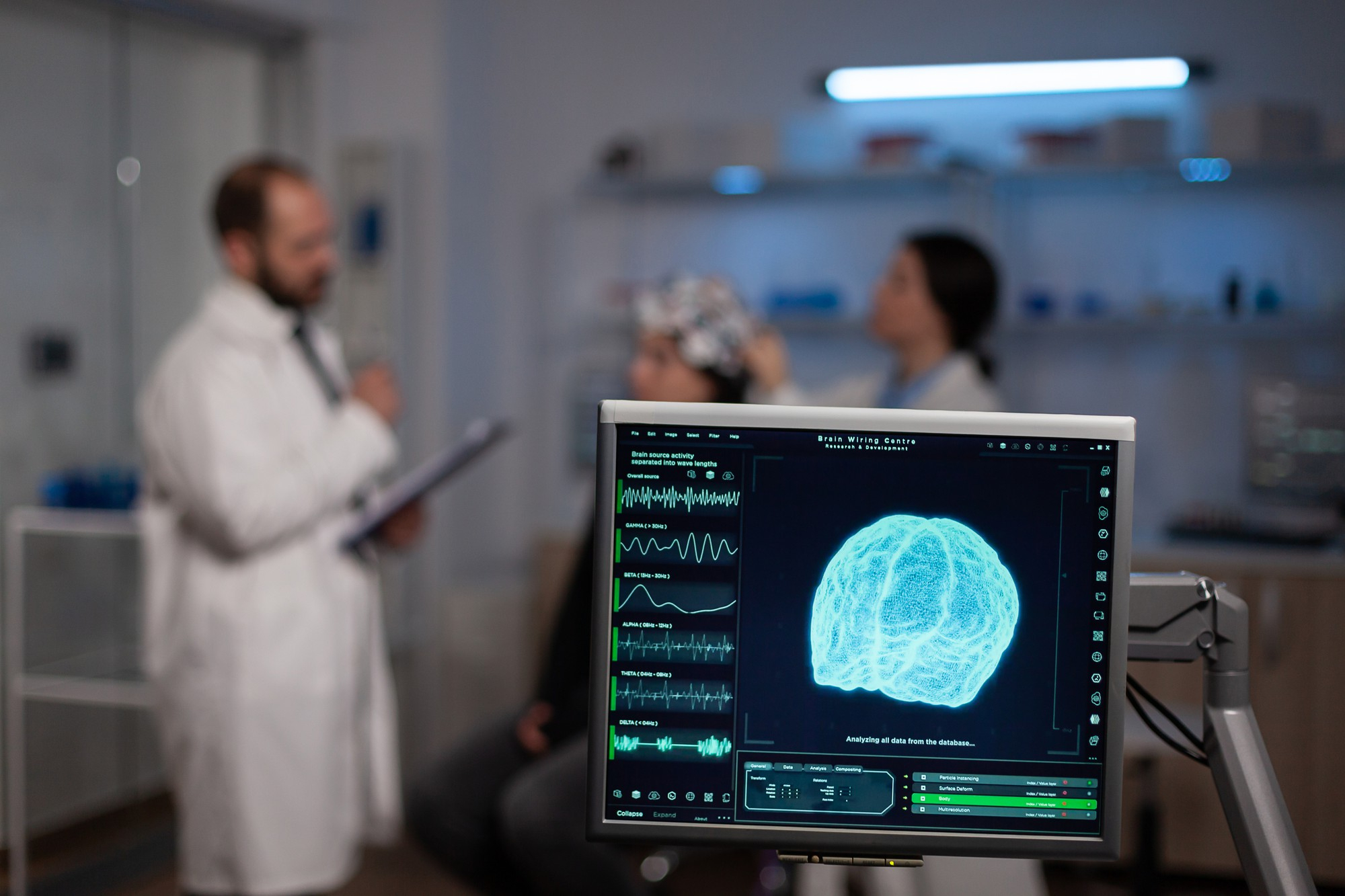
Brain Monitoring Market Overview
The global Brain Monitoring Market is projected to register a CAGR of approximately 6–7% through 2031, supported by the increasing burden of neurological disorders, continuous advancements in neurodiagnostic technologies, and rising demand for real-time brain function assessment. The growing incidence of traumatic brain injuries, stroke, epilepsy, Alzheimer’s disease, Parkinson’s disease, and other neurological conditions has significantly increased the adoption of advanced brain monitoring systems across healthcare facilities. Furthermore, expanding applications of brain monitoring devices in clinical research, critical care, and neurological rehabilitation are expected to fuel sustained market growth throughout the forecast period.
Brain monitoring involves the continuous measurement and assessment of electrical activity, cerebral oxygenation, intracranial pressure, and other neurological parameters to evaluate brain health and function. These technologies assist healthcare professionals in diagnosing neurological disorders, monitoring disease progression, guiding treatment decisions, and assessing patient recovery. Brain monitoring systems are widely utilized in hospitals, intensive care units (ICUs), emergency departments, operating rooms, neurological clinics, and research institutions.
The increasing focus on early diagnosis and preventive healthcare has accelerated the adoption of advanced brain monitoring technologies capable of detecting neurological abnormalities before irreversible damage occurs. As healthcare providers continue to prioritize personalized patient care, demand for accurate, portable, and minimally invasive monitoring solutions continues to rise.
Key Request a free sample copy or view report summary: https://meditechinsights.com/global-brain-monitoring-market/request-sample/
Rapid technological innovations have transformed traditional brain monitoring equipment into intelligent digital platforms offering improved signal quality, wireless connectivity, artificial intelligence-assisted analysis, cloud-based data management, and real-time reporting. These advancements have enhanced diagnostic precision while simplifying clinical workflows, making brain monitoring increasingly accessible across diverse healthcare settings.
Growing investments in neuroscience research, expanding healthcare infrastructure, favorable reimbursement initiatives in developed countries, and increasing awareness regarding neurological health are further supporting the expansion of the global brain monitoring market.
Market Drivers
Technological Advancements in Brain Monitoring Devices Drive Market Expansion
Continuous innovation in brain monitoring technologies remains one of the strongest growth drivers for the market. Modern devices feature miniaturized sensors, wireless communication capabilities, improved battery performance, and enhanced signal acquisition technologies that enable accurate neurological assessment with greater patient comfort.
Advancements in electroencephalography (EEG), intracranial pressure monitoring, cerebral oximetry, transcranial Doppler ultrasound, and multimodal brain monitoring have significantly improved diagnostic efficiency across hospitals and specialized neurological centers. These innovations enable clinicians to detect subtle neurological changes earlier, resulting in improved treatment outcomes and reduced complications.
Artificial intelligence and machine learning algorithms have further enhanced diagnostic capabilities by automating signal interpretation, identifying abnormal brain activity patterns, and supporting clinical decision-making with predictive analytics.
Increasing Burden of Neurological Disorders Supports Market Growth
The growing global prevalence of neurological diseases is substantially increasing demand for advanced brain monitoring systems. Rising cases of epilepsy, Alzheimer’s disease, Parkinson’s disease, traumatic brain injuries, stroke, brain tumors, sleep disorders, and neurodegenerative conditions require continuous neurological evaluation for effective disease management.
The aging global population represents another major contributor to market expansion, as elderly individuals are more susceptible to neurological disorders that require regular monitoring. Early diagnosis and continuous assessment help physicians optimize treatment strategies while improving patient quality of life.
Increased awareness regarding neurological health, along with improvements in healthcare accessibility, has encouraged wider adoption of brain monitoring technologies across both developed and emerging healthcare markets.
Market Restraints
Shortage of Skilled Healthcare Professionals Limits Market Adoption
Despite significant technological progress, the shortage of trained neurologists, neurophysiologists, and specialized technicians continues to restrict widespread adoption of brain monitoring devices. Many advanced monitoring techniques require experienced professionals for device operation, data interpretation, and clinical decision-making.
Healthcare facilities in developing regions often face challenges in recruiting qualified specialists capable of operating sophisticated neurological monitoring systems. This limitation reduces utilization rates, particularly in smaller hospitals and rural healthcare centers.
To address these challenges, manufacturers are developing automated systems featuring simplified interfaces, intelligent software, remote monitoring capabilities, and AI-assisted interpretation that reduce dependence on highly specialized personnel.
Market Opportunities
Growing Adoption of Home-Based and Bedside Brain Monitoring Creates New Growth Opportunities
The increasing shift toward decentralized healthcare is creating significant opportunities for home-based and bedside brain monitoring solutions. Healthcare providers are increasingly seeking portable devices capable of providing continuous neurological assessment without requiring patients to remain in specialized neurological units.
Compact wireless monitoring systems enable physicians to evaluate patients in emergency departments, intensive care units, ambulatory surgical centers, rehabilitation facilities, and home healthcare environments. These devices improve patient convenience while supporting continuous neurological observation outside conventional hospital settings.
The rapid expansion of telemedicine and remote patient monitoring programs further strengthens demand for connected brain monitoring devices capable of securely transmitting neurological data to healthcare providers for real-time evaluation and clinical intervention.
Growing investments in wearable medical technologies are expected to further accelerate the commercialization of portable neurological monitoring systems over the coming years.
Market Challenges
Limited Awareness Beyond Neurology Departments Restricts Market Penetration
One of the major challenges affecting market growth is the limited awareness of brain monitoring technologies outside specialized neurology departments. While neurologists routinely utilize these systems for patient assessment, other clinical specialties often continue relying on traditional neurological examinations rather than advanced monitoring technologies.
Emergency physicians, intensivists, anesthesiologists, trauma specialists, and surgical teams may underutilize brain monitoring devices despite their proven clinical benefits. This lack of multidisciplinary adoption limits the overall utilization of available technologies within healthcare institutions.
Expanding physician education programs, interdisciplinary clinical training, and hospital awareness initiatives will be essential for increasing adoption across a broader range of medical specialties.
Healthcare organizations are also working toward integrating neurological monitoring into standardized treatment protocols for emergency medicine, critical care, and perioperative management to improve utilization rates.
Market Trends
Artificial Intelligence and Wearable Brain Monitoring Devices Transform the Industry
Artificial intelligence has become one of the most influential trends shaping the global brain monitoring market. AI-powered software is improving diagnostic accuracy by automatically analyzing complex neurological signals, identifying abnormalities, and generating clinically relevant insights within seconds.
Machine learning algorithms reduce interpretation time while assisting physicians in detecting seizures, sleep disorders, cognitive impairment, and neurological deterioration with greater precision. These technologies also support predictive analytics, enabling earlier clinical intervention and personalized treatment planning.
Another significant market trend is the growing popularity of wearable brain monitoring devices. Lightweight wireless EEG headbands, smart headsets, adhesive skin patches, and portable monitoring systems are increasingly being adopted across hospitals, research institutions, sports medicine, military healthcare, and consumer wellness applications.
These wearable technologies offer greater patient mobility, simplified setup procedures, enhanced comfort, and continuous neurological monitoring without disrupting daily activities. Their integration with smartphone applications and cloud-based healthcare platforms further enhances usability and long-term patient management.
Additionally, growing collaborations between medical device manufacturers, digital health companies, and neuroscience research organizations are accelerating innovation in next-generation brain monitoring technologies that combine artificial intelligence, cloud computing, and remote patient monitoring capabilities.
Competitive Landscape
The global brain monitoring market is moderately consolidated, with several multinational medical technology companies maintaining strong competitive positions through continuous innovation, strategic acquisitions, research collaborations, and product portfolio expansion.
Leading manufacturers are investing heavily in research and development to introduce advanced neurological monitoring systems that deliver higher diagnostic accuracy, faster clinical decision-making, improved patient comfort, and seamless integration with hospital information systems.
Companies are increasingly focusing on wireless technologies, wearable devices, artificial intelligence, cloud connectivity, and multimodal monitoring platforms to strengthen their market presence. Strategic partnerships with hospitals, academic institutions, and neuroscience research organizations continue to accelerate product development and global commercialization.
Emerging companies are also introducing innovative solutions targeting unmet clinical needs through portable, cost-effective, and user-friendly brain monitoring technologies. The growing emphasis on personalized healthcare, digital medicine, and remote neurological monitoring is expected to intensify competition while encouraging continuous technological advancement across the industry.
Key Players
- Medtronic plc
- Koninklijke Philips N.V.
- GE HealthCare Technologies Inc.
- Nihon Kohden Corporation
- Natus Medical Incorporated
- Masimo Corporation
- Compumedics Limited
- Edwards Lifesciences Corporation
- Advanced Brain Monitoring, Inc.
- Spiegelberg GmbH & Co. KG
- Cadwell Industries, Inc.
- Elekta AB
- Drägerwerk AG & Co. KGaA
- Electrical Geodesics, Inc.
- Siemens Healthineers AG
Browse Report: https://meditechinsights.com/global-brain-monitoring-market/request-sample/
About Medi-Tech Insights
Medi-Tech Insights is a healthcare-focused business research & insights firm. Our clients include Fortune 500 companies, blue-chip investors & hyper-growth start-ups. We have completed 100+ projects in Digital Health, Healthcare IT, Medical Technology, Medical Devices & Pharma Services in the areas of market assessments, due diligence, competitive intelligence, market sizing and forecasting, pricing analysis & go-to-market strategy. Our methodology includes rigorous secondary research combined with deep-dive interviews with industry-leading CXO, VPs, and key demand/supply side decision-makers.