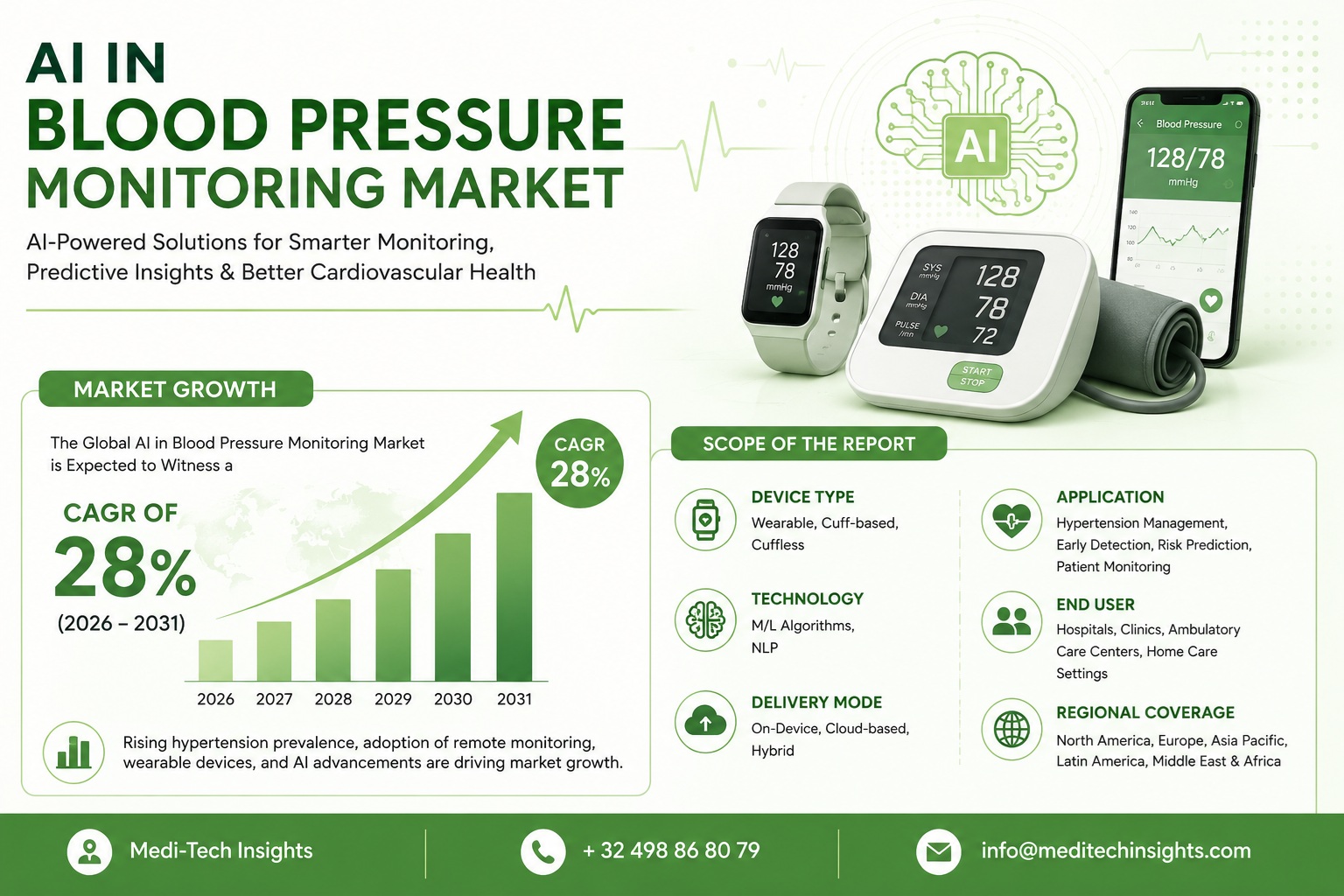
The global AI in blood pressure monitoring market is projected to expand at a CAGR of approximately 28% over the next five years, driven by the increasing prevalence of hypertension and cardiovascular diseases, growing adoption of remote patient monitoring (RPM) technologies, rising use of wearable healthcare devices, rapid advancements in artificial intelligence and biosensor technologies, and an increasing focus on preventive and personalized healthcare. As healthcare systems continue shifting toward digital and value-based care, AI-powered blood pressure monitoring solutions are emerging as an essential component of cardiovascular disease management.
Artificial intelligence is transforming conventional blood pressure monitoring by enabling continuous data collection, predictive analytics, automated risk detection, and personalized treatment recommendations. Unlike traditional monitoring methods that rely on periodic measurements, AI-enabled platforms analyze large volumes of physiological data in real time to identify subtle changes in blood pressure patterns and support timely clinical intervention. The combination of connected medical devices, cloud-based analytics, and machine learning algorithms is improving hypertension management while reducing the burden on healthcare providers.
Growing investments in digital health infrastructure, increasing telemedicine adoption, and expanding healthcare accessibility are further accelerating the implementation of AI-powered blood pressure monitoring technologies across hospitals, outpatient clinics, ambulatory care centers, and home healthcare settings.
Get Free Sample Report: https://meditechinsights.com/ai-in-blood-pressure-monitoring-market/request-sample/
Market Overview
AI in blood pressure monitoring combines artificial intelligence technologies with digital blood pressure measurement systems to enhance the detection, monitoring, and management of hypertension and other cardiovascular conditions. These intelligent solutions utilize machine learning algorithms, predictive analytics, cloud computing, and biosensors to deliver continuous monitoring, automated interpretation of physiological data, personalized health recommendations, and early warning alerts.
The market encompasses a broad range of products and technologies including smart cuff-based blood pressure monitors, cuffless monitoring devices, wearable health trackers, smartwatches, smart rings, mobile health applications, remote patient monitoring platforms, and AI-powered clinical decision support software.
Modern AI-enabled monitoring systems not only record blood pressure values but also evaluate long-term trends, identify abnormal fluctuations, predict cardiovascular risks, and facilitate remote physician consultations. These capabilities improve disease management by enabling proactive interventions before serious cardiovascular complications develop.
As healthcare providers increasingly emphasize preventive medicine and continuous patient monitoring, AI-powered blood pressure monitoring solutions are becoming an integral part of modern cardiovascular care.
Rising Burden of Hypertension and Cardiovascular Diseases Driving Market Growth
The growing global prevalence of hypertension remains one of the strongest factors supporting market expansion.
High blood pressure continues to be one of the leading risk factors for cardiovascular disease, stroke, kidney failure, and heart attacks worldwide. Aging populations, sedentary lifestyles, unhealthy dietary habits, obesity, smoking, excessive alcohol consumption, and increasing stress levels have significantly contributed to the rising incidence of hypertension.
Since hypertension often develops without obvious symptoms, routine monitoring has become critical for early diagnosis and long-term disease management.
Healthcare providers are increasingly recommending continuous blood pressure monitoring to identify high-risk individuals before severe cardiovascular complications occur.
Artificial intelligence significantly enhances conventional monitoring by analyzing blood pressure trends instead of isolated readings.
Machine learning algorithms can identify subtle variations that may indicate worsening hypertension, enabling physicians to initiate treatment earlier.
According to the World Health Organization, more than one billion adults worldwide are living with hypertension, while a significant proportion remain undiagnosed or inadequately treated.
This growing patient population creates substantial demand for intelligent monitoring solutions that support frequent measurements outside traditional healthcare facilities.
AI-powered platforms further improve medication adherence by providing automated reminders, personalized recommendations, lifestyle guidance, and remote physician connectivity.
As governments and healthcare organizations prioritize preventive cardiovascular care, intelligent blood pressure monitoring solutions are expected to become increasingly important for disease prevention and population health management.
Expansion of Remote Patient Monitoring Accelerating Market Adoption
The rapid expansion of remote patient monitoring has become another major driver for the AI in blood pressure monitoring market.
Healthcare providers increasingly rely on connected health technologies to monitor patients outside hospitals while improving disease management and reducing unnecessary clinical visits.
AI-enabled blood pressure monitoring devices continuously collect physiological data and securely transmit information to healthcare professionals through cloud-based healthcare platforms.
These technologies enable physicians to remotely evaluate patient conditions, adjust treatment plans, and identify deteriorating cardiovascular health before emergencies occur.
The growing popularity of telemedicine has further strengthened demand for AI-powered monitoring systems.
Remote consultations combined with intelligent blood pressure monitoring allow patients to receive continuous medical supervision from home.
Government initiatives supporting healthcare digitalization and telehealth infrastructure are accelerating adoption across both developed and emerging healthcare markets.
The growing burden of chronic diseases including hypertension, diabetes, obesity, and heart disease further increases demand for continuous remote monitoring solutions.
Artificial intelligence enhances remote care by automatically processing large datasets, identifying clinically significant abnormalities, and prioritizing patients requiring immediate medical attention.
Healthcare providers benefit from reduced manual data analysis while improving clinical efficiency and patient outcomes.
As value-based healthcare models continue expanding globally, remote monitoring technologies are expected to become standard components of chronic disease management programs.
Advancements in Artificial Intelligence and Biosensor Technologies
Continuous technological innovation is transforming blood pressure monitoring into a more intelligent, accurate, and personalized healthcare solution.
Machine learning algorithms have significantly improved the ability to analyze cardiovascular data, detect hidden patterns, and predict future health risks.
Advanced biosensors now provide highly sensitive physiological measurements while improving patient comfort.
The development of cuffless blood pressure monitoring technologies represents one of the most significant innovations in the market.
These systems estimate blood pressure using optical sensors, pulse wave analysis, electrocardiography, photoplethysmography, and wearable biosensors without requiring traditional inflatable cuffs.
Artificial intelligence further enhances measurement accuracy by compensating for environmental variables and individual physiological differences.
Cloud computing enables secure storage and continuous analysis of patient information while supporting physician access from virtually any location.
Integration with smartphones, wearable devices, and digital health applications enables continuous cardiovascular monitoring throughout daily activities.
Next-generation AI platforms are also incorporating predictive analytics capable of estimating future hypertension risk based on historical patient data and lifestyle behaviors.
These technological advancements continue expanding clinical applications across hospitals, home healthcare, occupational health, and preventive wellness programs.
Growing Adoption of Wearable Healthcare Devices
The increasing popularity of wearable healthcare technologies is creating significant growth opportunities for AI-enabled blood pressure monitoring.
Consumers are increasingly adopting smartwatches, fitness bands, smart rings, and wearable biosensors that continuously monitor cardiovascular health.
These devices allow individuals to track blood pressure trends, heart rate, physical activity, sleep quality, and overall wellness through integrated mobile applications.
Artificial intelligence transforms raw physiological measurements into actionable clinical insights by identifying abnormal trends and providing personalized health recommendations.
Wearable devices also encourage proactive disease prevention by increasing patient awareness and promoting healthier lifestyle choices.
Growing consumer interest in digital wellness, preventive healthcare, and fitness monitoring is expected to further accelerate wearable device adoption globally.
Healthcare providers are increasingly integrating wearable-generated data into clinical decision-making to improve long-term disease management.
Application Segment Analysis
Hypertension management remains the largest application segment within the AI in blood pressure monitoring market.
The growing number of patients requiring regular blood pressure assessment continues driving demand for intelligent monitoring systems capable of supporting long-term disease management.
AI algorithms improve hypertension control through continuous monitoring, personalized treatment recommendations, medication reminders, and automated risk alerts.
Remote patient monitoring represents the fastest-growing application segment.
Rapid telehealth expansion and healthcare digitalization have encouraged hospitals and physicians to adopt connected monitoring platforms for chronic disease management.
Continuous patient monitoring outside hospitals reduces healthcare costs while improving treatment outcomes.
Preventive healthcare and wellness monitoring also represent rapidly expanding application areas.
Consumers increasingly use wearable health devices to monitor cardiovascular wellness before disease develops.
Innovations including cuffless monitoring devices, smart rings, smartwatches, and AI-powered mobile applications continue supporting segment growth by enabling convenient real-time blood pressure monitoring.
Market Drivers
Rising prevalence of hypertension and cardiovascular diseases.
Growing adoption of remote patient monitoring systems.
Increasing utilization of wearable healthcare devices.
Rapid advancements in artificial intelligence technologies.
Continuous innovation in biosensors and cuffless monitoring technologies.
Growing demand for preventive healthcare solutions.
Expansion of telemedicine and digital health infrastructure.
Increasing focus on personalized medicine and home-based healthcare.
Market Opportunities
Development of next-generation cuffless blood pressure monitoring devices.
Growing integration of AI with wearable medical technologies.
Expansion of healthcare services across emerging economies.
Increasing investments in digital therapeutics and connected healthcare.
Integration of predictive analytics into cardiovascular disease management.
Growing adoption of cloud-based healthcare platforms.
Partnerships between medical device manufacturers and AI technology companies.
Expansion of remote chronic disease management programs worldwide.
Market Trends
Increasing commercialization of AI-powered wearable blood pressure monitors.
Growing adoption of smart rings and smartwatches for cardiovascular monitoring.
Rapid development of cuffless blood pressure measurement technologies.
Expansion of cloud-connected remote patient monitoring platforms.
Greater use of predictive analytics for hypertension risk assessment.
Integration of AI with mobile healthcare applications.
Increasing investment in personalized cardiovascular disease management.
Growing collaboration between healthcare providers and digital health companies.
Regional Analysis
North America accounted for the largest share of the global AI in blood pressure monitoring market.
The region benefits from advanced digital healthcare infrastructure, widespread telehealth adoption, strong healthcare spending, and a high prevalence of cardiovascular diseases.
Growing investments in artificial intelligence, favorable reimbursement policies, and increasing utilization of connected healthcare devices continue supporting regional market leadership.
The United States remains the largest contributor owing to strong technology adoption and continuous innovation in digital health.
Europe represents another major regional market driven by increasing healthcare modernization, an expanding elderly population, rising prevalence of hypertension, and supportive government initiatives promoting digital healthcare transformation.
Asia-Pacific is expected to register the fastest market growth during the forecast period.
Rapid healthcare digitization, improving healthcare accessibility, expanding smartphone penetration, increasing disposable incomes, and growing awareness regarding preventive healthcare are driving market expansion across China, India, Japan, South Korea, and Southeast Asia.
The increasing popularity of wearable health devices and AI-powered mobile healthcare applications further strengthens regional growth potential.
Latin America and the Middle East & Africa are also experiencing gradual adoption as healthcare infrastructure improves and digital health investments continue to increase.
Competitive Landscape
The AI in blood pressure monitoring market is characterized by strong competition among established medical device manufacturers, digital health companies, artificial intelligence developers, and emerging healthcare technology startups.
Market participants are investing heavily in research and development to improve monitoring accuracy, develop cuffless measurement technologies, strengthen AI algorithms, and expand remote patient monitoring capabilities.
Strategic collaborations, mergers and acquisitions, product launches, regulatory approvals, and partnerships with healthcare providers remain the primary growth strategies adopted by leading companies.
Continuous innovation in wearable technologies, cloud computing, biosensors, and predictive analytics is expected to intensify competition while creating new opportunities across global healthcare markets.
Key Players
- Withings (France)
- Aktiia SA (Switzerland)
- Biospectal SA (Switzerland)
- Omron Healthcare (Japan)
- Biofourmis (US)
- Edwards Lifesciences Corporation (now BD) (US)
- Hello Heart (US)
- FaceHeart Corporation (Taiwan)
- Shen AI (Estonia)
- Huawei Technologies Co., Ltd. (China)
- Philips Healthcare (Netherlands)
- Valencell, Inc. (US)
Conclusion
The global AI in blood pressure monitoring market is poised for exceptional growth as healthcare systems increasingly adopt intelligent technologies for continuous cardiovascular care. Rising hypertension prevalence, expanding remote patient monitoring programs, rapid wearable device adoption, and continuous advancements in artificial intelligence are transforming traditional blood pressure measurement into predictive and personalized disease management. With ongoing innovations in cuffless monitoring, biosensor technology, cloud-based analytics, and digital healthcare ecosystems, AI-powered blood pressure monitoring is expected to become a cornerstone of future cardiovascular care, enabling earlier diagnosis, improved clinical outcomes, enhanced patient engagement, and more efficient healthcare delivery worldwide.
Key Request a free sample copy or view report summary: https://meditechinsights.com/ai-in-blood-pressure-monitoring-market/request-sample/
About Medi-Tech Insights
Medi-Tech Insights is a healthcare-focused business research & insights firm. Our clients include Fortune 500 companies, blue-chip investors & hyper-growth start-ups. We have completed 100+ projects in Digital Health, Healthcare IT, Medical Technology, Medical Devices & Pharma Services in the areas of market assessments, due diligence, competitive intelligence, market sizing and forecasting, pricing analysis & go-to-market strategy. Our methodology includes rigorous secondary research combined with deep-dive interviews with industry-leading CXO, VPs, and key demand/supply side decision-makers.