Global MRI Systems Market Overview
The global MRI systems market is expected to expand at a CAGR of approximately 5% during the forecast period. Market growth is largely fueled by the increasing prevalence of chronic diseases, a growing aging population, and heightened demand for non-invasive diagnostic imaging. Technological advancements in MRI systems and rising adoption of advanced imaging techniques, such as functional MRI (fMRI), are further propelling market expansion.
Despite significant opportunities, high system costs, strict regulatory requirements, reimbursement challenges, and a shortage of skilled professionals remain key market constraints.
Get Free Sample Report: https://meditechinsights.com/mri-systems-market/request-sample/
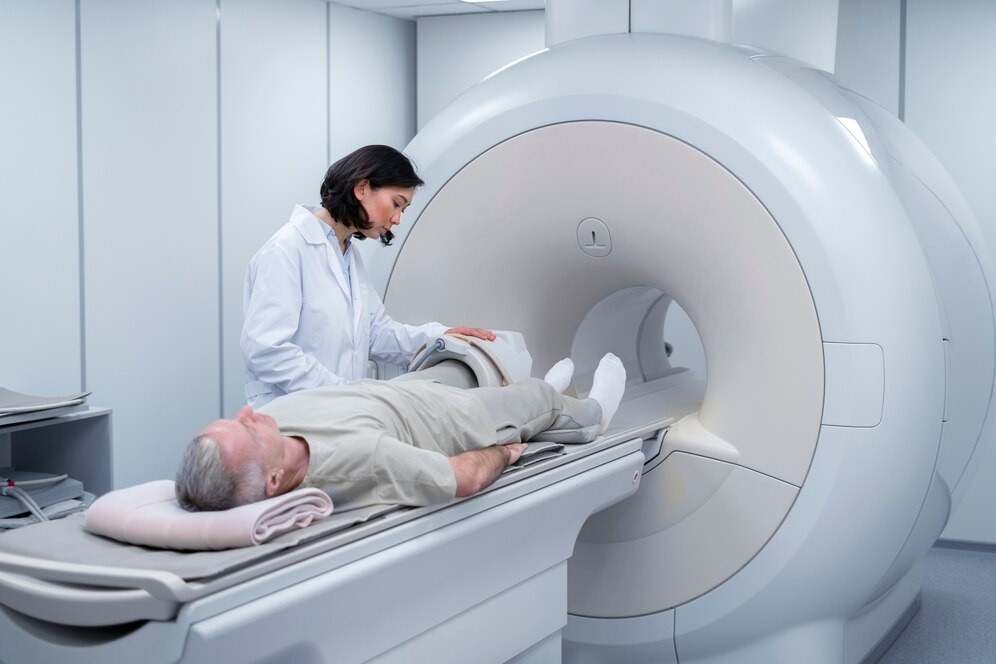
MRI systems are non-invasive imaging devices that use strong magnetic fields and radiofrequency waves to produce highly detailed images of internal organs, tissues, and anatomical structures. These systems are essential tools for disease detection, diagnosis, and monitoring, offering a safer alternative to X-rays or CT scans due to the absence of ionizing radiation. MRI operates by exciting protons within water molecules in the body, detecting their response to create cross-sectional, high-resolution images.
The versatility and safety of MRI technology make it a cornerstone of modern diagnostic and research applications across clinical and academic settings.
Growing Prevalence of Chronic Diseases
The global rise in chronic diseases, including diabetes, cardiovascular disorders, cancer, and stroke, significantly contributes to the demand for MRI systems.
According to the World Economic Forum (WEF), chronic diseases could impose a global economic burden of $47 trillion by 2030.
MRI systems provide highly detailed images of soft tissues, organs, and structures, enabling early detection and accurate diagnosis of complex conditions.
The non-ionizing nature of MRI makes it particularly suitable for frequent monitoring of chronic conditions without exposing patients to radiation risks.
MRI imaging supports the development of targeted and personalized treatment plans, improving patient outcomes and enhancing research into disease mechanisms.
By delivering critical diagnostic insights, MRI systems have become indispensable in modern healthcare, aiding both clinicians and researchers in disease management.
Technological Advancements Driving Market Growth
Innovations in MRI technology are enhancing imaging quality, operational efficiency, and patient experience, which in turn fuel market growth.
Advanced technologies address key challenges such as long scan times, patient discomfort, and the need for higher diagnostic precision.
Compressed Sensing and Artificial Intelligence (AI): Compressed sensing, when integrated with AI, can reduce scan times by more than 50%, improving patient throughput and convenience.
Helium-Free MRI Systems: Helium-free systems allow installation in locations unsuitable for traditional MRI systems, enabling broader accessibility.
High-Field MRI Systems: Adoption of 3 Tesla (3T) and 7 Tesla (7T) MRI machines provides exceptional image clarity for neurological, cardiovascular, and musculoskeletal imaging.
Functional MRI (fMRI) Technology: fMRI enables real-time mapping of brain activity, offering critical insights for neuroscience research and treatment planning.
Portable MRI Devices: Compact, mobile MRI systems expand access to high-quality imaging in remote or underserved regions, facilitating bedside diagnostics and emergency applications.
Competitive Landscape Analysis
The MRI systems market features both established and emerging players who actively pursue innovation, partnerships, and geographic expansion to maintain a competitive edge.
Key Players:
- GE Healthcare
- Koninklijke Philips
- Siemens Healthineers
- Canon Medical Systems Corporation
- Esaote SpA
- Hitachi Medical Corporation
- Hologic Inc.
- Bruker Corp.
- Fujifilm Holdings Corp.
- Shimadzu Corp.
- Aurora Imaging Technologies, Inc.
- United Imaging Healthcare
- Time Medical Systems
- Hyperfine
Market Drivers
Rising global incidence of chronic diseases and related health conditions
Expanding elderly population requiring frequent diagnostic imaging
Growing preference for non-invasive and safer diagnostic procedures
Technological advancements improving imaging quality, speed, and patient comfort
Increased adoption of advanced imaging modalities like fMRI for research and clinical purposes
Attractive Opportunities
Increasing adoption of high-field MRI systems such as 3T and 7T units
Growing focus on personalized and precision medicine using MRI data
Market expansion in emerging economies with improving healthcare infrastructure
Integration of artificial intelligence algorithms for enhanced image analysis and workflow efficiency
Development of compact and portable MRI solutions for bedside and remote applications
Technological Innovations and Future Trends
AI and machine learning integration in MRI systems is enhancing diagnostic accuracy and workflow automation.
Real-time image reconstruction allows faster scanning and reduces the time patients spend in the MRI scanner.
New contrast agents and imaging sequences are improving visualization of complex pathologies, particularly in oncology and neurology.
Portable MRI devices are gaining traction for emergency, mobile, and rural healthcare applications, ensuring wider access to critical imaging services.
High-field and ultra-high-field MRI systems enable researchers to study anatomical and functional details with unprecedented precision.
Consumer Behavior and Adoption Trends
Healthcare providers increasingly prefer non-invasive imaging solutions for safer and more comprehensive diagnostics.
Patients are more informed about imaging options due to online health resources and social media, driving demand for MRI-based diagnostics.
Integration of AI, fMRI, and high-resolution imaging aligns with rising expectations for precision medicine and personalized care.
Hospitals and diagnostic centers are investing in advanced MRI systems to attract patients seeking state-of-the-art healthcare solutions.
Regional Insights
North America remains a leading market due to advanced healthcare infrastructure, technological adoption, and high awareness of MRI benefits.
Europe demonstrates steady growth with an emphasis on high-field MRI adoption and research applications.
Asia-Pacific is emerging as a high-potential market due to expanding healthcare infrastructure, rising awareness, and increased disposable incomes.
Latin America and the Middle East are witnessing growing adoption of MRI systems as medical facilities modernize and expand access to diagnostic imaging.
Regulatory Environment
MRI systems are subject to rigorous regulations to ensure safety, performance, and quality standards.
Devices must undergo clinical testing and obtain approvals from national regulatory authorities before market entry.
Compliance with manufacturing and labeling standards is essential to maintain patient safety and build trust in the technology.
Ongoing regulatory oversight encourages innovation while safeguarding public health and promoting sustainable market growth.
Conclusion
The MRI systems market is poised for steady growth, driven by chronic disease prevalence, aging populations, and rising demand for advanced non-invasive imaging technologies.
Technological innovations, including AI integration, portable MRI devices, high-field systems, and fMRI capabilities, are expanding market potential.
Emerging markets, personalized medicine applications, and growing adoption of advanced imaging techniques present significant opportunities.
Key players continue to invest in R&D, partnerships, and global expansion, ensuring MRI systems remain at the forefront of modern diagnostics and medical research.
Key Request a free sample copy or view report summary: https://meditechinsights.com/mri-systems-market/request-sample/
About Medi-Tech Insights
Medi-Tech Insights is a healthcare-focused business research & insights firm. Our clients include Fortune 500 companies, blue-chip investors & hyper-growth start-ups. We have completed 100+ projects in Digital Health, Healthcare IT, Medical Technology, Medical Devices & Pharma Services in the areas of market assessments, due diligence, competitive intelligence, market sizing and forecasting, pricing analysis & go-to-market strategy. Our methodology includes rigorous secondary research combined with deep-dive interviews with industry-leading CXO, VPs, and key demand/supply side decision-makers.